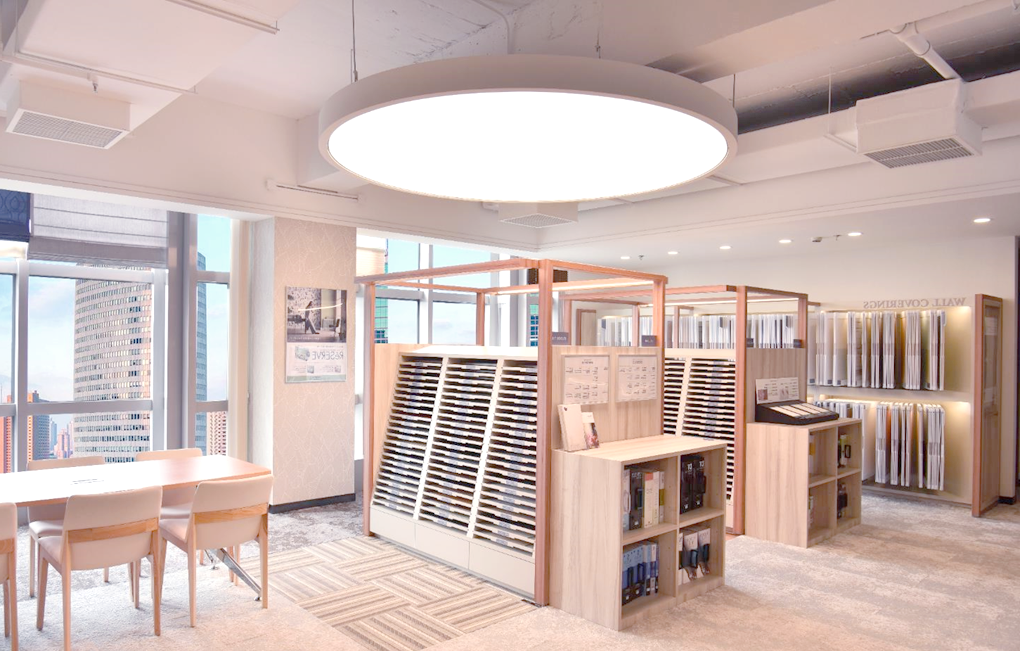
When people talk about Japanese interior finishes, wallpaper, curtains, and decorative films usually come up first. But those in the know look down—at Sangetsu carpets.
Founded in 1849 as a textile shop in Nagoya, Sangetsu has grown into one of Japan’s most respected comprehensive interior materials companies. While they produce everything from wallcoverings and window treatments to flooring, tiles, and upholstery fabrics, their carpet line—especially carpet tiles and commercial modular rugs—has built a serious following among architects, designers, and procurement managers in offices, hotels, and design studios.
Why Designers Actually Pay Attention to Sangetsu Carpets
1. It’s Not Just About Looks—It’s About Light
Sangetsu’s NT700 series takes a distinctly Japanese approach: when office lighting is dimmed from 750lx to 500lx to save energy, spaces tend to feel gloomy and fatiguing. Sangetsu addressed this by increasing the carpet’s surface light reflectance—from roughly 8.1% to around 15% in some colorways—and validating the effect using Panasonic’s Feu spatial brightness index. The result? Lower-wattage lighting without the cave-like feeling.
This matters enormously in ABW (Activity-Based Working) environments, where furniture moves constantly and the floor becomes the largest “reflector” in the room.
2. Solution-Dyed Nylon That Actually Lasts
Sangetsu’s core commercial lines lean heavily on solution-dyed nylon:
- Pigment is integrated at the polymer stage, not surface-dyed—colorfastness is exceptional
- UV-resistant; passes Japanese colorfastness testing standards
- Coffee, juice, even diluted bleach can be cleaned without fading
- Four-lobed hollow fiber cross-section resists crushing and matting under heavy foot traffic
Translation: it survives high-traffic office corridors without looking tired after six months.
3. ECO GRADE: Environmental Impact You Can Actually Read
Sangetsu developed its own ECO GRADE rating system for carpets, evaluating recycled yarn content, recycled backing materials, and manufacturing energy intensity. Their NT Double Eco products incorporate regenerated nylon yarns (like ECONYL®, sourced from reclaimed fishing nets and post-consumer carpet) paired with recycled PVC backing. Official figures cite up to ~61% CO₂ reduction compared to legacy production methods, with recycled material content reaching up to ~49%.
No greenwashing—the numbers are on the spec sheet.
4. Design Collaborations That Go Beyond “Safe Neutrals”
Beyond the expected business greys and blues, several lines stand out:
- COLOR TRANSITION (with textile designer Yuri Himuro): colors shift subtly depending on viewing angle and distance
- KAGETOHIKARI / Shadow and Light (in collaboration with Kengo Kuma): translates the Japanese aesthetic of in-ei (shadow and light play) into floor texture
- MORRIS CHRONICLES home rugs: William Morris patterns—Strawberry Thief, Willow Bough—rendered as residential-scale rugs, with anti-mite and antibacterial treatments available
Commercial vs. Residential: Which Line Fits Where
▍Offices / Commercial Spaces (Modular Tiles)
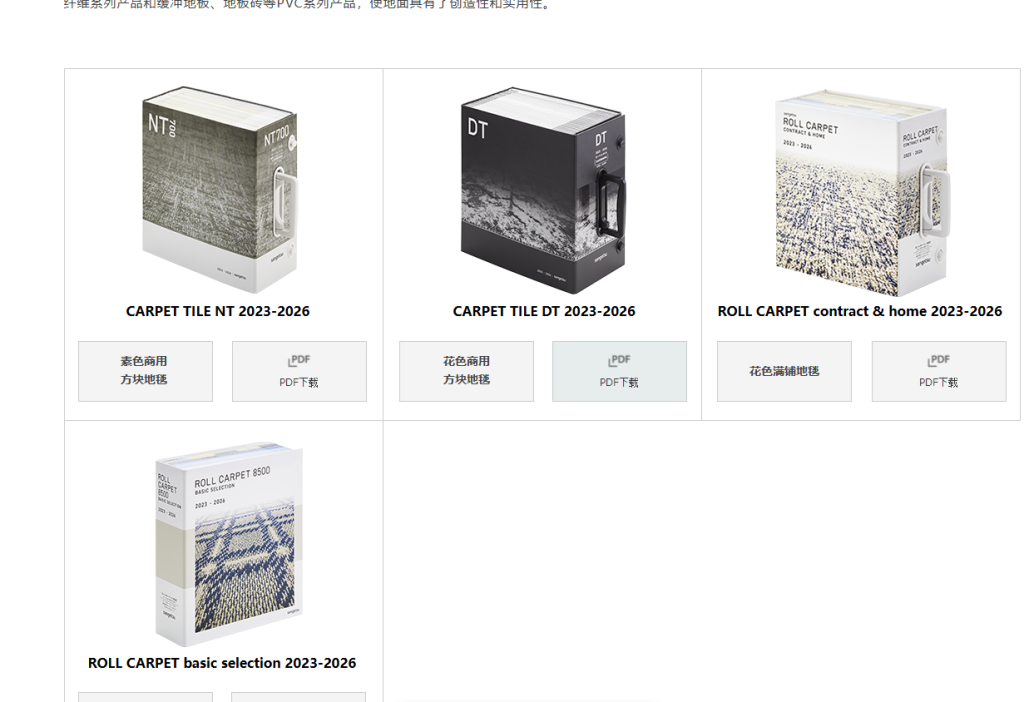
- NT700: Flagship solution-dyed nylon line; optimized reflectance; price range ¥5,400–23,000/m² covering standard through premium tiers
- NT350: PP solution-dyed nylon; value-engineered for budget-conscious projects
- DT Series: High-end hotel lobbies, executive boardrooms, prestige reception areas
- Modular format = replace one tile instead of the whole floor; ideal for reconfigurable ABW layouts
▍Residential / Model Units (Broadloom & Area Rugs)
- Pre-sized rugs: AWAYUKI microfiber, KAZANE lustrous chenille, MOUTON faux lambswool
- Custom rugs: 170+ base textures to choose from; cut to circular or irregular shapes; optional edge binding
- Residential lines emphasize underfoot comfort, antimicrobial/anti-mite treatments, and coordinated palettes that pair with Sangetsu wallcoverings and curtains
Three Things to Watch During Installation
- Subfloor moisture control: Carpet tiles aren’t waterproof. Raised access floors and self-leveling concrete must meet moisture-content specs before installation.
- Directional pile: Textured lines like NT700 Misty II have directional patterning. Set orientation on the drawings relative to main light sources—otherwise you’ll get visible “shading” across the floor plane on site.
- Local inventory in China: Sangetsu’s Shanghai warehouse stocks approximately 42 curated NT700 colors. For tight timelines, confirm in-stock SKUs before finalizing design selections to avoid waiting on Japan-to-China replenishment.
The Bottom Line
What makes Sangetsu carpets distinctly Japanese isn’t overt “wabi-sabi” patterning—it’s that they’ve engineered lighting performance, carbon footprint, maintenance cycles, and wear resistance into a 50cm × 50cm tile.
If you’re renovating an office, fitting out a boutique hotel’s public areas, or shopping for a living-room rug that doesn’t scream “mass-market home decor,” Sangetsu offers something more durable than fast-fashion Scandinavian brands and far more practical than pure-luxury imports.